Saint Olga of Kiev, my 34th great grandmother

Saint Olga of Kiev, my 34th great grandmother
SAINT OLGA OF KIEV, MY 34TH GREAT GRANDMOTHER
Showing posts with label comparative religion. Show all posts

Friday, July 29, 2022

THE ELEPHANT IN THE ROOM


Christ the Yogi

This week I have had to change the name of my blog, because an acquaintance started using the name "The Accidental Hermit" in her advertisements that then obliterated all the search results for my blog when anyone Googled it. Even when the name of my blog was typed exactly, "Diary of an Accidental Hermit," pages and page of ads for her podcast popped up, and my blog of ten years, with more than 350 posts, was nowhere to be found. It was as if someone took a match to thousands of hours of work and made an internet bonfire with them.

My next concern, of course, is that the two of us would be confused for one another because we are doing a very similar thing.  Though I've been occupied with it for two decades, and she is a newby, that is not enough of a distinction for the purposes of Mr. Google. We are "urban hermits" living in apartments in smallish towns in the Southwest, advocating for the contemplative life.


In the process of renaming my blog and refining it so that I can differentiate myself from that person who started using the moniker I have had for more than a decade, I realized that there is a huge elephant in the room that I have to clean up, and I am happy to have found the silver lining in all this mess, because we all know that there usually IS a silver lining to any conflict because that is what God typically does. He can and does bring good out of bad.

I have realized that some readers may not understand my religious affiliation(s). Is she Catholic? Is she Hindu? Who IS this woman, anyway?


The short answer is that I am Catholic.  I was a Hindu renunciate when I converted, but it is a complication story that has a lot of "moving parts" and will take some time to tell adequately, so I will just give a partial answer here and then provide the whole story in a book I am writing and will make available at some time in the future.

I was raised without any religion whatsoever. My parents hated religion, especially Catholicism, but I was always interested in God and immediately began learning about various religious traditions when I left home at 16. I spent some time with the Scientologists. I dabbled with Nicheren Shoshu Buddhism. I became interested in meditation and searched for something in the "yellow pages" phone book in Sacramento, California, where I found an advertisement for the Vedanta Society, which began years of close involvement, mostly in Los Angeles, where I moved after a year with the Vedantists in Northern California.
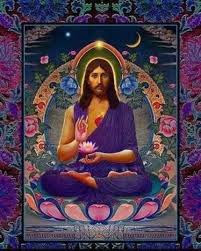


What I loved about the Vedantists, in addition to the peaceful presentations in their temple, the discussions about spiritual life and practices, especially meditation, is the respect that Vedanta has for all religions. They say that "all religions lead to God" and that one can remain a Christian or Buddhist or whatever other faith and a Vedantist at the same time! Of course, at that time, I had no other religion, so I threw myself totally into Vedanta, especially the meditation.

I asked the swami about the Vedantists' claim that all paths lead to God and asked if he really believed it.  He said, "Yes, but our way is faster!" Very clever.

Oddly enough, though I knew very little about Christianity and I had never even attended a Christian church service, when I presented myself to the swami for initiation in the formal ceremony in which they do this, he gave me the Jesus mantra. We had not discussed it, and it was a shock to me, because I thought he would give me a different one.


Swami Swahananda in the back
I am in the front, at the left.

Within a short time, I expressed interest in joining the convent, which I did do in my early thirties. But there was always something that did not quite fit. I loved the life, but something was not working within me. It did not help that the nuns were exceedingly uninterested. They were afraid that because I was the Swami's friend, I would try to "take over." It was ridiculous, but that was the situation.

Also, the physical work we were required to do was very hard on my body, and I hurt my back at one point and never really recovered. I have the same weakness in my back, to this day. (At that time, the ersatz head of the convent went to the swami and made the claim that I was "faking" a back injury, which he told me about immediately. This is an example of how cruel those women could be toward one another, but, as I have said many times elsewhere, the reason men are in charge of the world is because women do not support other women; they actually work to undermine one another at every opportunity.)


Vedanta is remarkably like Catholicism in MANY ways, but unlike the impersonal God of Vedanta that "became all this" the God that I eventually met and fell in love with was the personal God. But it wasn't Ramakrishna. His image left me cold. Nor could I comfortably believe in reincarnation, a central theme in Hinduism and Buddhism. I struggled with these ideas. I loved the life but could not accept these concepts because it was not what I was experiencing in my meditation. I remember standing in the kitchen chatting with one of the nuns who said that she was looking forward to "merging into Brahman" when she died, and my immediate response was, "that sounds revolting!" I began to realize I was in the wrong place. It was a very sad time for me, as I love the life, but there were these other pressures.  I left once, then returned, then left for the final time. The swami was sad to see me go. When I told him I was leaving, he said, "but who will smile at the devotees?"


After leaving the convent, I tried to get baptized by the Catholics, but the nun in charge of the RCIA class was operating under a confusion that the Catholic Church would not BAPTIZE me until a previous non-sacramental marriage in my teens had been "annulled," which is NOT the policy of the Catholic Church and makes no sense at all but I could not dissuade her and did not have any Catholic friends to advocate for me. In fact, I had never even known a Catholic, personally. This is how The Catholic Church pushes people away. If you look different at all, if your experience is not the old-fashioned nuclear family model, if you don't have money or children to give to the faith, no one welcomes you.  (Please do not write me telling me how wrong I am about your faith. Understand that I am speaking about my experiences, not yours.)


So, there I was, having left the monastic life I loved. I could not join a Catholic convent, as I had intended, because I could not even get BAPTIZED by the darn Catholics. I became unchurched and unaffiliated to anything for many years. I continued my Vedanta meditations, but I felt that the universe had bamboozled me. I had left the monastic life that I loved, that allowed some time for advanced spiritual practices, ostensibly to do a better thing in the Catholic Church, and they would not even baptize me - not because of a requirement of the faith but because of a prejudice and misconception by a local functionary. The months and years ticked by, I tried to get on with my life, but I was out of place. Just surviving.

When I became disabled in my late 40s and had to stop working outside the home, my swami agreed that I should take sannyas (final monastic vows) in the same way that one of our Vedanta saints had done "directly from Ramakrishna" in a spiritual ceremony. He gave me a few instructions and named me "Sannyasini Kaliprana." This was an unconventional arrangement, but he was an unconventional swami.

Then he asked me to take over the administration of an ashram house in the Southwest, but my disabilities were a concern to me, and I would have no security once I moved in there.so I ultimately turned down the posting. 


Swami Swahananda
My Vedanta teacher

Instead, I stayed where I was and decided to live as an independent sannyasini. By this time I was in my 50's and was living on my Social Security retirement funds. There IS a tradition in India of  people giving up "householder life" for sannyas in their later years, and this arrangement made sense to me. I settled in to become a hermit and spend my time in silence, solitude, and contemplation, while leading an occasional lecture or workshop on meditation.

But The God of Catholicism continued to call me. I had been very much affected by the works of the Catholic mystics I'd read about while in the Vedanta Convent and every once in a while would feel the pull again. Eventually, I met a woman who lived in my apartment complex who was an independent Catholic nun. One thing led to another, and I was accepted into the Catholic Church in about 2006, I believe.


Around the same time, my genealogy research began to reveal that I am descended from many famous Catholic saints, and that helped to make me feel I belonged to a particular group of people. I began to learn about and commune with my grandmothers and grandfathers, like Saint Olga of Kyiv, Saint Margaret of Scotland, and many others, and gradually began to feel more and more like I belonged SOMEWHERE at least. 


Saint Margaret of Scotland
My 29th great grandmother

Unfortunately, nearly all of my Catholic friends and relations are dead, but this is what happens when you belong to a church that is disconnected from its mystic, contemplative tradition, as the American Catholic Church is at the moment. Most of the parishes seem uninterested in anything but abortion and politics, which leaves me cold. Actually, the most popular topic is FAMILY, and I do not have one of those. Most of the family I would want to discuss are dead.

In this process, I learned that the principles and practices of monastic life for Catholic and Vedantist are nearly identical. Both have a tradition of hermit monastics. My niche is very small, but at least I have one now! I particularly enjoy corresponding with other independent monastics and had an idea in the back of my mind that I might like to create a loose association of independent hermits - to support them, spiritually - but I have a lot on my plate.


Saint Olga of Kyiv
"Equal to the Apostles"
My 34th great grandmother


As is probably obvious, I do not have any "official" designation from anyone, nor is one required. Anyone who wants to lead their life in silence and contemplation is free to do it and both Hinduism and Catholicism have a long tradition of people taking off into the wilderness to commune with God as hermits, swamis, sannyasinis, or whatever you want to call it. In February of 2023, I will celebrate my 20-year anniversary of my commitment to this life, and I intend to continue on in this vein for as long as The Lord will allow, in addition to which I make a little art and write a little. It is not a bad "retirement."


I hope this blog post answers any lingering questions anyone may have about exactly who I am and what I am doing here, as opposed to that OTHER woman who was raised as a Catholic, joined a Catholic institution while very young, and eventually left to live as a hermit in an apartment in Arizona. That is another person - someone else who is being advertised as "The Accidental Hermit" but whose background, story, and orientation is quite a bit different than mine. We are not the same person.

But no matter WHO we are, may God bless us all!

May we all be blessed!

Mother Silver Rose
Sannyasini Kaliprana

P.S. All of the blog posts I write are independently researched and written by me and all of them are protected by legal copyright, so please just enjoy them here and leave them here where you found them and do not copy any of it to any other place for any purpose.

(c) Copyright 2022, Silver S. Parnell
All rights reserved.

Sunday, October 4, 2020

SAINT AUREA OF PARIS FEAST DAY - OCTOBER 4 - NOTES ON CONTEMPLATIVE MONASTIC LIFE


Relic of the saint in a decorative housing


Saint Aurea of Paris celebrates her feast day today, along with Saint Frances of Assisi and at least half a dozen other saints, all male, as far as I can tell. As you know, I am keen to make the female saints a bit better known than they are presently. Of course, there is only so much one can say about a saint for whom not much information has been passed down to us over time - not because they are any less saintly than other saints, no doubt, but because women just don't get much recognition in a church run entirely by men.

I used to make a joke out of this, saying that women are more naturally saintly, so that when a man lives a saintly life, that fact alone is a miracle! While humorous, I won't claim that it is true. I am just casting around for some reason besides the obvious - that women are not celebrated nearly as much as the men...for whatever reason.

Why does this matter? Everyone needs a source of inspiration, and I find nothing more inspiring than another woman living the Christian ideals most assiduously - especially monastic women, and CONTEMPLATIVES, since that is my path.


Saint Aurea of Paris


Of particular interest with regard to today's saint is that she died of the plague. Considering that we are currently beset with a modern day epidemic, we can certainly relate to what she must have been feeling, especially since 160 of her monastic sisters also died of it.

Saint Aurea was originally Syrian but relocated to Paris, France and was put in charge of St. Martial convent as Abbes by Saint Elegius in 633, where she ruled for 33 years (a number I find interesting because when our Lord died, HE was 33, I believe.)


Saint Elegius
(Sometimes called "Eloi")

I find Saint Elegius himself to be a most interesting person, having been a metalsmith, and this is an area that interests me. I am currently contemplating learning how to make punched tin frames for my religious paintings and am trying to calculate whether all the time and money will be worth doing it, since I have already lost the vision in my left eye and doctors anticipate that I will likely lose it in my right as well.

Saint Elegius was extremely gifted in many areas and is the patron saint of metalsmiths, craftspeople, horses, and is credited as a gifted spiritual teacher. Saint Godeberta was one of his pupils.

Interior of Saint Paul Saint Louis Church in Paris, France
Photo by David Iliff
License: CC BY-SA 3.0


The Saint Martial convent where Saint Aurea of Paris was Abess is no more. I offer you the following etching from 1850 which depicts a narrow impasse called the "Impasse Saint-Martial" which was all that remained of the Saint-Martial convent by 1850.


artist: 
Theodor Joseph Hubert Hoffbauer
(1839-1922)

It does make me a little sad to see how this convent that held such holy women, saints and martyrs to the faith, has just disappeared - eaten up, as it were, by the city of Paris. Over time, these holy institutions could not be maintained. In addition to the terrible EXPENSE, there is no longer the enthusiasm for it. The faithful don't feel inspired to support the monastic institutions as they once did because they no longer understand the absolute value of the spiritual work of men and women who have set themselves aside for the sole purpose of contemplation of the Divine and prayers for the faithful. Intercessory prayer isn't valued in the same way it once was.

In addition, from the other side of things, the monastics have been sullied by the corruption of a small number of priests who were predators of children, who snuck into the ranks of the holy ones, causing untold damage to innocents. The monolithic institution of "the church," in turn, did not deal with these predators in an appropriate way, which highlighted some degradation that had occurred in the church, over time.

You see, monastic life in the Christian tradition actually started out being mostly composed of independent hermit-type Christians who set themselves apart from society, initially going out into the dessert to live a penitential, solitary existence dedicated to prayer and ascetic practices. Later, hermits are found housing themselves in caves, such as in the fairy chimneys of Cappadocia, in present-day Turkey. In some countries, they retreated to the forest. 


Hot air balloons float over the caves of
former religious hermits
in the "fairy chimneys" of Cappadocia, Turkey

At times, a particularly holy person would attract followers who would cluster around them in their own hermitages. Various types of organization were employed. Things grew from there, and I suspect that at least a partial return to the earlier manifestation of independent monastics is more than due. The corruptions of monolithic institutions need to be addressed, at least in the West.

In the Catholic Church, the home of the Christian mystics and saints, there are STILL official "diocesan hermits" provided for in the canon, but it appears that the institution is loathe to confer that designation. As in other traditions, if you are willing to give a small fortune to The Church, it will quickly dispense with any impediment that it imagines for anyone else  who might approach it. Even so, as a Diocesan Hermit, you are not all that "independent" because every detail about your life has to be approved by the bishop. You can't blame them for wanting to be in control of anyone pretending to be a part of the official institution, though. Mentally unstable people are often attracted to extreme forms of religious expression, and it takes a lot of work to establish whether or not an individual is of sound mind. 

Hindu sannyasini - holy woman
at the Kumba Mehla celebration


There are many independent holy men and women who have taken sannyas in India. A great number belong to large institutions. Some merely belong to the tradition. My sannyas was an independent thing approved by my swami, who had hoped that I would open a Vedanta Center in Arizona, but which turned out to be more physically taxing than I would be able to endure. Plus, I would be living in what was, essentially, a very small but very public space that I would have to share with a male swami who would visit once every 4 to 6 weeks. The master bedroom was to be reserved for the visiting swami, and this reminder that I was to do all the work while the man got all the benefits was something I did not wish to revisit in my life.

It isn't that I don't like people, by the way. I like people too much, and it would have pulled my focus dangerously off-kilter. The swami knew this, however, and I don't think he was surprised when I ultimately declined his offer to open the center in Arizona. When I had left the Hollywood convent, he said to me, "who will smile at the devotees if you leave?" He knew my nature.


Hindu holy woman - Sannyasini (renunciate)


In American culture, the general lack of value placed on the contemplative path is unfortunate. Just the presence of a person who has dedicated themselves to this way of life has a positive effect on everyone who comes in contact with him or her. But I remember hearing from many of the devotees who frequented the Vedanta temple that there was a good deal of resentment against the monks and nuns because it appeared as if they lived a higher standard than the devotees. The devotees didn't have to live in close quarters under constant criticism and, while the housing appeared to be grand, it is well known in monastic circles that we could use all sorts of things but couldn't actually have anything. Bottom line? The grass is greener, as they say. (Personally, I was thrilled at the freedom that this granted me. It was a delight to only have 2 or 3 keys on my key ring and not to have to pay a single bill.)

Many people in my generation became enamored of the mystical, contemplative life of the Hindus that was made popular in the hippie era. What many of us did not know is that the Christian church has its OWN mystics that are just marvelous. There is nothing in the Christian Church that cannot be perceived through the meditative methods of Vedanta. God is ONE.

[NOTE: While I am  happy to look at Catholicism through the lens of Vedanta, some Hindus whose tradition I am co-opting by this are, at times, peeved by it. Out of respect for that point of view, I offer THIS LINK TO A "HINDUISM TODAY" ARTICLE about this topic. It appears to be mostly a problem for those in India who object to the perceived efforts on the part of the Catholic Church to convert Hindus to the faith by using their own images and traditions "against" them.]


Sign outside Bede Griffiths' Shantivanam Ashram
in India


Unfortunately, parish life in America, on the other hand, is rule-bound with little support for the contemplative perspective. Pedestrian matters of sex, family life, contraception and abortion grab most of the attention, unlike in the early days of the church. I pray that one day they strike a better balance.

It had been my intention, in the early days of my hermitage, that I would start a small Catholic ashram catering to like-minded people, but I was robbed of a promised inheritance that would have purchased the house, and my physical disabilities worsened and multiplied. It isn't out of the question for the future, but at 66 years old, I am fast running out of future. I DO hope that my writings encourage others to explore this life, however.

Like the Church of Saint Martial, which housed so many women and so much prayer then disappeared into nothingness, I am of a certain age when I contemplate my own demise and anticipate that I will likewise disappear without much fanfare. The prayer corner where I spend my hours speaking with the Lord will be partitioned and distributed among the faithful, a statue here, an icon there, a rosary somewhere else. None of these things are permanent. What IS permanent are my prayers and the vibrations of my conversations with and meditations on the Lord.

What I hope to leave behind is an appetite for the contemplative life, and it is my hope that other women will be inspired to live the vowed life at home, like their friend, the accidental hermit.

May we all be blessed!

Silver Rose

Sannyasini Kaliprana

P.S. Food has gotten more expensive during the Covid virus, on top of a food budget that was ALREADY very tight here. I've long ago reverted to a vegetarian diet, but would welcome some canned fish, if wild caught (mercury free.) There are other necessary items listed on my donation list on Amazon. They have my address and will mail to me direct. Check it out on my donation list, link below:

CLICK HERE FOR DONATION LIST