Saint Olga of Kiev, my 34th great grandmother

Saint Olga of Kiev, my 34th great grandmother
SAINT OLGA OF KIEV, MY 34TH GREAT GRANDMOTHER
Showing posts with label Diary of an Accidental Hermit. Show all posts

Saturday, January 14, 2023

SAINT PAUL OF THEBES, THE FIRST HERMIT - JANUARY 15


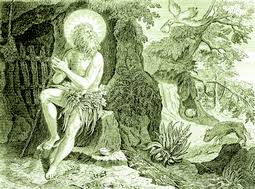
Saint Paul receiving bread from the raven
that was purported to keep him alive to
be more than 100 years old


In a couple weeks, I will be celebrating my 20th anniversary as an urban hermit, so the topic is on my mind.

You know, I am always fascinated to read about the lives of these saints who were hermits, and there are quite a few of them in recorded history.

Paul is considered the first Christian hermit. We know about him because Saint Jerome wrote about him and Saint Anthony the Great, who had a connection later in life.  Paul is said to have lived to be more than 113 years old, kept alive by a raven that brought him half a loaf of bread every evening. I don't know what to say about that. I don't think I could be kept alive by only half a loaf of bread every night!


Paul did not initially intend to become a hermit. His brother-in-law wanted to grab his inheritance, so he was about to report Paul to the authorities for being a Christian. Paul went out into the desert to escape being imprisoned and killed but he eventually realized that hermit life suited him.


Obviously, he could not benefit from his inheritance ANYWAY, living in the desert like that, so it appears that he was not that attached to money to begin with, and his brother-in-law needn't have conspired to rob him of it. I find it interesting that I was also robbed of my inheritance and, although I was originally distressed about the injustice of it, considering the level of my needs as a result of my numerous disabilities, I have come to see that it might have turned out to be a curse, if I had not been written out of my father's will after he got Alzheimer's. I would likely have been hounded by people who were intent on grabbing what they could. Money is not the solution some people imagine it to be.  

I DO wish I wasn't a burden on friends, though. That is the one regret. On the flip side, I believe that The Lord has personally sent these kind people to me as his emissaries of love.


The person who robbed the inheritance will have to pay the price instead of me, I suspect. Anyway, the lack of the inheritance provides more opportunity for suffering that I may then offer to the Lord, and I should be grateful for the grace to endure it. I know it sounds backward to some people, but suffering is a type of spiritual currency. It is just ONE of the many ways that God brings all things to the good for those who believe.

Hermits, though they live alone, are normal human beings. They do have friends, but the nature of the relationships are not frequent or typical. Saint Paul became friends with Saint Anthony the Great during two days in Paul's 113th year!


Saint Anthony the Great and Saint
Paul of Thebes, the first hermit

Anthony and Paul only spent a day and a half together, and the next time Anthony went to see him, Paul was dead. There is a charming myth that two lions helped Saint Anthony dig Paul's grave.

I would have loved to have heard the conversation between those two holy men. I can only imagine!


There have been times, when considering my hermit life, that I have thought I should give it up because I am "doing it" imperfectly, but except for the rare moment of loneliness, I still feel that this life suits me, even if I am not a saint thereby. It is good for the ego for a person not to be too "successful," especially a religious person, it seems to me.

So I will slog along in my pathetic representation of a religious hermit, do the best I can, and be grateful for it all. When I celebrate my anniversary on February 3rd, I will be suitably humble before God.


The lives of the hermit saints bear little, if any resemblance to my life, but then the life of the typical resident of Thebes at that time looks nothing like the typical American in 2023! In addition to the differences connected with living a modern life, my numerous and growing disabilities also interfere with the aceticism one would usually expect from a hermit, so I do the best I can. The constant chronic pain is my offering and may be a more painful sacrifice to give than the more austere lives of these early saints. We all do the best we can within the conditions that are provided and the parameters of our own abilities.


Don't get me wrong. I have given it a lot of thought and wondered if I "should" give up the idea of the hermit life, but, although my religious practice is not perfect and, in some superficial ways, I appear to be a fairly typical senior lady of my time and place, I have no strong desire to have any other kind of life goal. I kept trying to see myself doing anything other than what I do now, and I just could not rustle up the interest! If I had wanted a more "normal" life, such as the other women I know, I surely would have tried for it long before my 20 year anniversary, don't you think?


Whatever defects remain in my daily practice must be battled and subdued, if possible, but in any case I will not give up the goal of gaining a more perfect union with The Lord through giving myself to Him alone, even if I fail in the attempt.  Please wish me the best and pray for me.

In the meantime, if you are interested in Saint Paul of Thebes, the First Hermit, and his contemporaries, or you are curious about early hermit life and lore, please take a look at the following links:


At some point, I believe that, such as with Anthony and Paul,  I would also like to develop a friendship with at lease one other hermit - especially an urban hermit. We have much to share with one another, I think - especially after 20 years of doing this. I also wonder if it would be a good idea to find a regular confessor, especially now that Covid is not as much of a problem as it was - but I suspect that I may wait another year before risking spending too much time outside the hermitage. God will bring what He wants for me.

I hope you will all pray for me, as I pray for you.

God bless and keep you!

Silver Rose


Wednesday, August 3, 2022

SAINT WALTHEOF OF MELROSE, my great uncle, August 3, 2022


Saint Waltheol de Lis, Abbot
Second Abbot of Melrose Abbey
b. abt 1100 - d. 3 Aug. 1159

Saint Waltheol's mother was my 28th great grandmother, Maud (Matilda) of Northumberland, but not through my grandfather, David I, King of Scotland. Instead, his father was her other husband, Simon de St. Liz, so my relationship with Saint Waltheol is a bit more complex than is typical. I know it seems like I am related to every Saint in the calendar, but I assure you that it is not unusual because once you are descended from certain key figures in one of the noble houses of Europe, you are descended from or cousin to the whole lot of them, due to intermarriage. Many Americans are descended from these folks. In fact, a dear friend on the other side of town is a cousin of mine who is related to and/or descended from many of the same people I talk about in my blog. They are our family.

Why does it give me such joy to know that so many of my ancestors and other relatives are saints? Frankly, it increases my hope of Heaven. It is wonderful to know that I have family members in Heaven who can intercede for me before the throne of God. Yes, I can speak for myself and commune with the Lord in my meditations, but I feel like I can use all the help I can get, and because I am descended from these folks, it gives me a feeling of family that I do not have on earth. My natal family was always extremely small, and most have died. .  


Saint David I, King of Scotland
my 38th Great Grandfather
Saint Waltheof's Step-father


As a member of the nobility, Waltheol would have received that sort of education that would prepare him for that version of government that existed at the time, but he ended up as a monastic, which would not have been considered terribly unusual for at least one son to be given to the vowed life, usually in a monastery or at least for some time in a hermitage. Holy orders as a priest would sometimes follow. Sometimes, as in Waltheof's case, their royal connections would result in a quick climb up the administrative ladder of the church. 

First, he was an Augustinian Canon at Nostrell Abbey. Shortly thereafter, he became Prior of Kirkham in North Yorkshire. He was nominated to be the successor to Thurstan, Archbishop of York, when Thurston died in 1140, but because Waltheof was the step-son of King David I of Scotland (ALSO made a saint after death and was my 38th Great Grandfather) it was suggested that he may have had an allegiance that might have interfered with other people's plans for whoever became Thurstan's successor, so his nomination to the post failed.

(I suspect that there was one other thing that was actually more to blame for his losing the post to someone else. Waltheof had demonstrated real grit and an independent spirit when he had refused to agree to give the ecclesiastical manor of Sherburn-in-Elmet in the West Riding of Yorkshire to William of Aumale (my 2nd cousin, 26 times removed) who supported his nomination. I would like to think that my saintly relative refused to do this because it was wrong, rather than out of some selfish reason. It represented a very large and prestigious piece of territory, with a substantial church.)

The manor house was called "Athelstan's Palace" but I was unable to find any photos or illustrations of it. Apparently, it is in ruins. I don't know what, if anything, is left of it.

When trying to find a photograph of the manor, I DID find some photographs of the gorgeous church that belongs to it and lays nearby (All Saints.)  It exists today and has been in that smallish town for at least 1000 years and has a rich history. The church was meant to be the religious seat of a much larger area than is obvious at this time, which accounts for its sumptuousness. The first king of England, Athelstan (my 31st great granduncle), gave the manors of Sherburn and Cawood to the Archbishop of York in 938, when he defeated the Danes at Brunanburg. This would be a conqueror's thanks to God, in the form of an offering of a portion of the lands involved.


All Saints Church
Sherburn-in-Elmet


(Saint) William Fitz-Herbert ended up with the archbishopric, instead of Waltheof. Saint William Fitz-Herbert of York is my 1st cousin, 25 times removed. In case you are wondering what that means, exactly, it means that he is my first cousin, but 25 generations backwards in time. His father, Herbert of Winchester, is my 28th Great Grandfather. Thank God Ancestry figures this out for me automatically because I could never do it myself!

After Waltheol's nomination for the Archbishopric failed, he gave up on climbing the ecclesiastical ladder and became a Cistercian monk. (Cistercian's are contemplatives.) First, he went to Wardon Abbey, and then to Rievaulx. Melrose Abbey is a daughter house of Rievaulx, and he was elected as its abbot in 1148, a position he kept for the rest of his life.  Melrose Abbey, in Scotland, was founded by Saint David I, King of Scotland, (my 28th great grandfather and Waltheof's step-father.)

During his tenure at Melrose, he was offered a bishopric (St. Andrews) but he declined, and I wonder if his time with the contemplatives had adjusted his thinking about the direction and tenor of his life which had, in the beginning, looked like it may have at least partially been driven by the pursuit of position and power.

Saint Waltheof died at Melrose on August 3, 1159.


Melrose Abbey


After a few years of one abbot attempting to suppress the growing interest in the saintliness of Waltheof by the locals, a subsequent abbot went "all in" and the tomb of my cousin was opened by Enguerrand, the Bishop of Glasgow, in the presence of 4 abbots, twelve years after Walthof's death.  Waltheof's body and vestments remained intact - one of the miracles sometimes seen with the dead saints. I have a book at home about "The Incorruptibles." These folks are seen to be so pure that even their bodies won't rot after death.

When thinking about his life, it occurs to me that a person's saintliness only comes into clear focus after they have died and we have nothing left but their earthly remains and a few chicken scratches in whatever publication memorializes their time on earth. Waltheof's life, especially in the beginning of his monastic "career," did not appear to be particularly saintly, yet when the tomb was opened, the secret was exposed in a definitive way. Bodies do not naturally remain fresh and preserved years after death.

There were hints, of course. He could have opted for the power and prestige of life at court, at the outset, since he was born of a noble family and all sorts of positions could have been available to him. His step-father was king of Scotland, after all. But he chose a religious profession and, even though he pursued, for a time, a succession of ecclesiastical promotions, in the end he opted for the secluded life of a monk in a contemplative institution.


Of course, there were some miracles. One of the tales about the miracles of Saint Waltheof concerns a summer day, when Waltheof was visiting Rievaulx after their main meal of the day. All the monks were retired to the dormitory for the afternoon rest period, and Waltheof, who had stayed late in the church to pray, and not wanting to disturb them by arriving to the dormitory after they had already started their rest, tried to sleep in the cloister instead. It wasn't comfortable. He was probably very hot, so he decided to pray instead of nap, and he was visited by a monk who shone with "a glorious light, and his garments were resplendent with Jewels, and on his head there was a brilliant crown," (quoted portion from Thomas Merton's book.)

Following this miraculous being was a sparkling assemblage of followers who shone as brightly and richly as did their leader, who turned out to be the first abbot of Melrose. The rest were that abbot's spiritual children, monks and brothers who had passed on. Each jewel that decorated these holy souls represented someone who these monks and brothers had saved with the words or examples of their holy life.

Personally, I believe that these miracles are only possible for someone living an intensely holy life.


The story proceeds on from there, but this is the place in the narrative that gives us the point I think is most necessary right now. Aside from finding their body incorrupt, the thing that really reveals the holiness of a person is how they inspire others to likewise live holy lives.

The thing about contemplative life is that it is all "an inside job," in that it is a work that is almost invisible. You don't get rewards and money for a job well done in that field, do you? We have these ideas of how a saint may speak and behave, but plenty of scammers have been known to fake these things in order to manipulate others. I have met a few in my life alone! 

Saint Waltheof was said to be endlessly kind to the poor, very gentle in his handling of the monks in his care, modest and humble, and supposedly cured one man of blindness, which is the one rare spectacular feat I was able to find in his life. Of course, that one appeals to me, since I am mostly blind in my left eye and I am in the midst of fighting the disease that is threatening to blind me completely by taking my right eye as well! Today, I pray to my Saintly cousin for his help in this regard.

Some people close to Waltheof were convinced of his saintliness, but it seems to me that in order to recognize the holiness of another person, it is often necessary to oneself have a portion of that holiness in one's own soul! "It takes one to know one," is a cliche that is very true in this sphere of life. The suspicion of  holiness is sometimes confirmed when the body is found to be incorrupt, while it can typically only be telegraphed and guessed at while the person still lives.

Meanwhile, there are plenty of easily duped people who follow charlatans that are obviously deceitful con artists, yet the gullible devotees will swear up one side and down the other that the object of their devotion is practically the "second coming!" We see this in all arenas, from religious, to government, to families. The thing that gives this away, in my observation, is that the followers of charlatans do not typically adopt a more holy life. Instead, their selfishness and ego increase. Sometimes, they even take joy in the misfortune of others. We just need to pay attention and ask ourselves if our spiritual mentors inspire us to love our neighbor and pray for our enemies, feed the hungry, clothe the naked and visit the prisoner, as Jesus asked us to do.

Do your friends inspire you to a holy life? Or do you keep people around because they make you laugh or they make you feel good about yourself? Do you make friends with people who are honest and kind, or is it more important to you that they be in a particular socio-economic class? I really think this topic is worth giving some thought.

As usual, may we all be blessed!

Silver Rose

P.S. All of the blog posts I write are independently researched and written by me and all of them are protected by legal copyright, so please just enjoy them here and leave them here where you found them and do not copy any of it to any other place for any purpose, as that would be against the law, and I will pursue my rights in this regard.

(c) Copyright 2022, Silver S. Parnell
All rights reserved.


Monday, August 1, 2022

OUR LADY OF THE ANGELS AND THE PORTIUNCULA - August 2, 2022


Assumption of Mary into Heaven

Today's feast observance that I am interested to learn also has a strong link to the subject of HERMITS because this little building, the Portiuncula in which Saint Francis lived, prayed and died, was said to have been built by the hermits of The Valley of Josaphat, also called "The Valley of Decision" sometime during the reign of Pope Liberius (352-366.) This fact was only known to us after about 1645, at least in the written record available to us at the current time, so who really knows?


Notice that the story talks about a group of hermits? Very few hermits are actually completely alone, and if they are alone, it is for a short time because other hermits typically join them at whatever location the original hermit can be found. Being a hermit does not mean that one is a misanthrope. It means that the person takes himself/herself out of the typical toing and froing of life to dedicate themselves to thoughts of and prayers to God more than anything else. I do miss that companionship of other hermits, but God has made me strong enough to endure this isolation.                                                                                                                                          


Sometime after the year 516, Benedict of Nursia was the owner/keeper of the Portiuncula. At that time, it was called Our Lady of the Valley of Josaphat or of the Angels - referring to Mary's assumption into Heaven being accompanied by angels. 

There is another tradition that says that the singing of angels has often been heard there, where the little run-down building was hidden among the oak trees of a small forest.


At some point after St. Francis renounced his fortune, he restored this little chapel. He built a hut nearby and was joined by some who followed him in his way of life, and this is where he founded the Franciscans, so this feast day and this little building are incredibly important to the Franciscan order. It was given to him in 1211 and on Palm Sunday of that year, he received Clare of Assisi, and the Poor Clares were formed. Some very poor and temporary little huts were built for the nuns, and their institution was surrounded by a hedge. The friars met in the little church during Pentecost every year.


Death and Ascension of Saint Francis of Assisi
Giotto de Bondone


Evidently, when he sensed he was dying, he had his friars takes him to the Portiuncula so he could die there at sunset on Saturday, October 3, 1226.

Various buildings were erected near and around this little chapel, but eventually they were all torn down in favor of this beautiful Basilica of Our Lady of the Angels which now houses the Portiuncula.


The darling little powerhouse of a church inside of the Basilica, is exquisitely decorated on the outside by various religious artists over the years.

I am in favor of the church maintaining beautiful reminders of its history and its saints. I love it that a grand and gorgeous basilica was built around this little church with the powerful history. Personally, I believe it is a mark of our great love for Our Lord that we exalt him in the most exquisite manner whenever we can. There are plenty of protestants who find fault with this tendency to beautify our churches, our altars and reminders of our history. But the atmosphere that emanates from an object that has been subjected to the proximity of a holy person such as Saint Francis can thereafter help other pilgrims to feel more of a closeness to the Lord who is all beauty Himself. Raising these things to the heights of artistic expression is one manner of showing the ultimate respect and love for the creator who enabled us to participate in His creative power in this way.


THE INDULGENCE

Whether or not the indulgence granted for this feast day was initiated by Saint Francis himself is under question in a couple of the pages I read, but the indulgence has been confirmed several times, officially, over the years, so the typical requirements, when met, will merit a full indulgence. Catholics will know what I am talking about. Anyone else who has a question about the indulgence, can check these sources:

WIKIPEDIA RE: Portiuncula Indulgence

OUR LADY OF THE ANGELS -Portiuncula Indulgence


If you would like to learn more about today's feast of Our Lady of the Angels and the Portiuncula, then here are a few links you can check out:

WIKIPEDIA

VIATOR

COMMUNIO

OUR LADY OF THE ANGELS PROVINCE - Franciscan Friars Conventual

CAPDOX - Capuchin Franciscan Friars Australia

BOOK OF HEAVEN

CHARIOT OF FIRE

CORRIDORS BLOG

ROMAN CATHOLIC SAINTS

I hope you enjoy this beautiful feast day and that you are able to avail yourself of the opportunity to earn an indulgence. Even if you doubt the efficacy, give it a try anyway. It couldn't hurt, right?  And if you could pray for me while you are in church, I would be so very grateful.

May we all be blessed!

Silver Rose

P.S. All of the blog posts I write are independently researched and written by me and all of them are protected by legal copyright, so please just enjoy them here and leave them here where you found them and do not copy any of it to any other place for any purpose.

(c) Copyright 2022, Silver S. Parnell
All rights reserved.

Sunday, July 31, 2022

MY COUSIN, SAINT NEOT OF CORNWALL, THE HERMIT - July 31, 2022


Stained glass window of Saint Neot
and the deer that volunteered to
plough the fields for him.

Today's saint is a cousin of mine, part of the Wessex folks from whom I descend. He died on July 21, 877 in Cornwall, which is where my great grandfather was born, as it happens. We do not know his date of birth.

He was related to my 33rd great grandfather, Saint Alfred the Great (who visited him many times and sought his counsel), in which case, he is more than a shirt tail relation to me, but some kind of first cousin, probably 38 times removed. Something like that.

Some people express disdain when they hear the degree of relation, but they are ignorant of history. Saints of the United Kingdom and Western Europe who were part of the nobility have extensive written records to corroborate their family lines and, once you establish your relationship with one of them, you can be sure you are descended from or otherwise related to many others, as all the nobles were related to one another in some fashion.  At least, it seems that way to me!

We know that Neot's father's name was Ethelwulph, which was a fairly common name of the day, but other than those two facts about his family origin, history records little else about his ancestry. We know a fair bit about his reputation, movements, supposed miracles, and the disposition of his relics, and if you are interested in this little saint, then a simple Google search can tell you a lot.

I found Neot to be quite interesting. First, as a matter of simple curiosity, I was interested to learn that he was only 4 feet tall. We know that modern man is a bit taller than in previous centuries, but even in those days, 4 feet tall would be exceedingly short. It makes me wonder if he was one of the little people, as they're sometimes called. I find it charming and lends even more mystique to his mythic story. I find it a particularly good sign that someone a bit different was accepted into the vowed life of that era, which we sometimes think of as being a backward and more prejudiced and superstitious one.

Neot's name was originally something else but somehow was given this moniker that originated in the word "neophyte." It represents a sort of nickname, and you can read more about that online. 


The ruins of Glastonbury Abbey
where Saint Neot began his
monastic life


Saint Neot was known for having both a remarkable intellect, a love for study, and an intense devotional nature, and he began to attract some attention at Glastonbury Abbey, where he was a monk and was ordained as priest at one point.

People will sometimes gather around a spiritual personality like this. But Neot wasn't interested in fame or flattery. In order to save his spiritual life, he removed himself to a hermitage in Cornwall (the remains of which have been obliterated, and we have no idea where it was.) He lived there for 7 years.

There are a lot of stories passed down through the ages about the miracles of St. Neot. In one of them, Neot is responsible for some fish coming back to life. He was mostly a vegetarian but God had given him permission to eat one fish a day. His attendant in the monastery made the mistake of bringing two one day. Neot, like most spiritual people, take their instructions from God in a rather serious fashion, and concerned about that, he had his attendant return the fish from where they'd been caught - and they both came back to life. This is how he became the Patron saint of FISH!

I used to love to fish, and I like to paint them. I also enjoy stories about fish, so I am interested in learning more about St. Neot and this reputation as a fish whisperer.


The above painting is a watercolor I did of the New Mexico Brown Trout. I used to love fishing, but I am not physical able to do it any more.

It is common for some saints, especially the hermits, to be attributed with some special harmony with the wild animals they find in nature - and it makes sense to me because animals, especially prey animals, have to be very sensitive to the vibrations of other living being around them, in order to protect themselves. Animals can often tell when a person means them no harm and when it is safe to be around them. 

One of Neot's miracles has to do with the wild deer offering themselves as draft animals to pull the plough on the monastery grounds. They would, supposedly, arrive for work in the morning, offer their necks to be hitched up, plough the ground all day, and then go home at night. It's a darling story, and one of the stained glass windows at a St. Neot's church location celebrates it:


Stories get built up over the centuries until they are a bit fantastic, but it probably started with something very simple - perhaps a special relationship with the deer of a local herd. You can well imagine the seed of this purported miracle. You could see how this man's friendship with the local deer could be considered a sign of his great spirituality.

Today I relate to a part of the story about my sainted cousin because he became peeved at the number of spiritual tourists that started to come and bother him.  My apartment location has gotten more and more busy. There are all sorts of people walking back and forth, inches from my window


None of this is conducive to the life of a spiritual person trying to lead a quiet life of prayer, on top of constant traffic outside my window, and people staring into my apartment with their noses inches from the glass.

I have been yearning to move to a different location for the longest time. Having an urban hermitage CAN work out, if you have the right setup, but this place is far too big and there are too many people living here and impinging on my privacy.


Statue of St. Neot

Please pray for me, that I may somehow move to a more conducive monastery space that will allow for a more concentrated prayer life, as well as some room for the art projects that proliferate and with which I hope to better support the place, as well as others who may come after me. But most important, of course, is that our spiritual lives remain fresh and lively and that we are happy within ourselves and with The Lord.

May we all be blessed!

Silver Rose

P.S. All of the blog posts I write are independently researched and written by me, and all of them are protected by legal copyright, so please just enjoy them here and leave them here where you found them.  It is illegal to copy any of it to any other place for any purpose without my express written consent.

Please understand that it is not allowed to copy this elsewhere, credit me with the writing, and then think you have done what is right. Contact me for permission.


(c) Copyright 2022, Silver S. Parnell
All rights reserved.

Friday, July 29, 2022

THE ELEPHANT IN THE ROOM


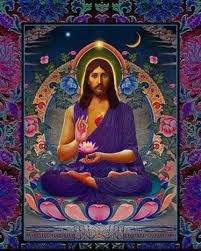
Christ the Yogi

This week I have had to change the name of my blog, because an acquaintance started using the name "The Accidental Hermit" in her advertisements that then obliterated all the search results for my blog when anyone Googled it. Even when the name of my blog was typed exactly, "Diary of an Accidental Hermit," pages and page of ads for her podcast popped up, and my blog of ten years, with more than 350 posts, was nowhere to be found. It was as if someone took a match to thousands of hours of work and made an internet bonfire with them.

My next concern, of course, is that the two of us would be confused for one another because we are doing a very similar thing.  Though I've been occupied with it for two decades, and she is a newby, that is not enough of a distinction for the purposes of Mr. Google. We are "urban hermits" living in apartments in smallish towns in the Southwest, advocating for the contemplative life.


In the process of renaming my blog and refining it so that I can differentiate myself from that person who started using the moniker I have had for more than a decade, I realized that there is a huge elephant in the room that I have to clean up, and I am happy to have found the silver lining in all this mess, because we all know that there usually IS a silver lining to any conflict because that is what God typically does. He can and does bring good out of bad.

I have realized that some readers may not understand my religious affiliation(s). Is she Catholic? Is she Hindu? Who IS this woman, anyway?


The short answer is that I am Catholic.  I was a Hindu renunciate when I converted, but it is a complication story that has a lot of "moving parts" and will take some time to tell adequately, so I will just give a partial answer here and then provide the whole story in a book I am writing and will make available at some time in the future.

I was raised without any religion whatsoever. My parents hated religion, especially Catholicism, but I was always interested in God and immediately began learning about various religious traditions when I left home at 16. I spent some time with the Scientologists. I dabbled with Nicheren Shoshu Buddhism. I became interested in meditation and searched for something in the "yellow pages" phone book in Sacramento, California, where I found an advertisement for the Vedanta Society, which began years of close involvement, mostly in Los Angeles, where I moved after a year with the Vedantists in Northern California.


What I loved about the Vedantists, in addition to the peaceful presentations in their temple, the discussions about spiritual life and practices, especially meditation, is the respect that Vedanta has for all religions. They say that "all religions lead to God" and that one can remain a Christian or Buddhist or whatever other faith and a Vedantist at the same time! Of course, at that time, I had no other religion, so I threw myself totally into Vedanta, especially the meditation.

I asked the swami about the Vedantists' claim that all paths lead to God and asked if he really believed it.  He said, "Yes, but our way is faster!" Very clever.

Oddly enough, though I knew very little about Christianity and I had never even attended a Christian church service, when I presented myself to the swami for initiation in the formal ceremony in which they do this, he gave me the Jesus mantra. We had not discussed it, and it was a shock to me, because I thought he would give me a different one.


Swami Swahananda in the back
I am in the front, at the left.

Within a short time, I expressed interest in joining the convent, which I did do in my early thirties. But there was always something that did not quite fit. I loved the life, but something was not working within me. It did not help that the nuns were exceedingly uninterested. They were afraid that because I was the Swami's friend, I would try to "take over." It was ridiculous, but that was the situation.

Also, the physical work we were required to do was very hard on my body, and I hurt my back at one point and never really recovered. I have the same weakness in my back, to this day. (At that time, the ersatz head of the convent went to the swami and made the claim that I was "faking" a back injury, which he told me about immediately. This is an example of how cruel those women could be toward one another, but, as I have said many times elsewhere, the reason men are in charge of the world is because women do not support other women; they actually work to undermine one another at every opportunity.)


Vedanta is remarkably like Catholicism in MANY ways, but unlike the impersonal God of Vedanta that "became all this" the God that I eventually met and fell in love with was the personal God. But it wasn't Ramakrishna. His image left me cold. Nor could I comfortably believe in reincarnation, a central theme in Hinduism and Buddhism. I struggled with these ideas. I loved the life but could not accept these concepts because it was not what I was experiencing in my meditation. I remember standing in the kitchen chatting with one of the nuns who said that she was looking forward to "merging into Brahman" when she died, and my immediate response was, "that sounds revolting!" I began to realize I was in the wrong place. It was a very sad time for me, as I love the life, but there were these other pressures.  I left once, then returned, then left for the final time. The swami was sad to see me go. When I told him I was leaving, he said, "but who will smile at the devotees?"


After leaving the convent, I tried to get baptized by the Catholics, but the nun in charge of the RCIA class was operating under a confusion that the Catholic Church would not BAPTIZE me until a previous non-sacramental marriage in my teens had been "annulled," which is NOT the policy of the Catholic Church and makes no sense at all but I could not dissuade her and did not have any Catholic friends to advocate for me. In fact, I had never even known a Catholic, personally. This is how The Catholic Church pushes people away. If you look different at all, if your experience is not the old-fashioned nuclear family model, if you don't have money or children to give to the faith, no one welcomes you.  (Please do not write me telling me how wrong I am about your faith. Understand that I am speaking about my experiences, not yours.)


So, there I was, having left the monastic life I loved. I could not join a Catholic convent, as I had intended, because I could not even get BAPTIZED by the darn Catholics. I became unchurched and unaffiliated to anything for many years. I continued my Vedanta meditations, but I felt that the universe had bamboozled me. I had left the monastic life that I loved, that allowed some time for advanced spiritual practices, ostensibly to do a better thing in the Catholic Church, and they would not even baptize me - not because of a requirement of the faith but because of a prejudice and misconception by a local functionary. The months and years ticked by, I tried to get on with my life, but I was out of place. Just surviving.

When I became disabled in my late 40s and had to stop working outside the home, my swami agreed that I should take sannyas (final monastic vows) in the same way that one of our Vedanta saints had done "directly from Ramakrishna" in a spiritual ceremony. He gave me a few instructions and named me "Sannyasini Kaliprana." This was an unconventional arrangement, but he was an unconventional swami.

Then he asked me to take over the administration of an ashram house in the Southwest, but my disabilities were a concern to me, and I would have no security once I moved in there.so I ultimately turned down the posting. 


Swami Swahananda
My Vedanta teacher

Instead, I stayed where I was and decided to live as an independent sannyasini. By this time I was in my 50's and was living on my Social Security retirement funds. There IS a tradition in India of  people giving up "householder life" for sannyas in their later years, and this arrangement made sense to me. I settled in to become a hermit and spend my time in silence, solitude, and contemplation, while leading an occasional lecture or workshop on meditation.

But The God of Catholicism continued to call me. I had been very much affected by the works of the Catholic mystics I'd read about while in the Vedanta Convent and every once in a while would feel the pull again. Eventually, I met a woman who lived in my apartment complex who was an independent Catholic nun. One thing led to another, and I was accepted into the Catholic Church in about 2006, I believe.


Around the same time, my genealogy research began to reveal that I am descended from many famous Catholic saints, and that helped to make me feel I belonged to a particular group of people. I began to learn about and commune with my grandmothers and grandfathers, like Saint Olga of Kyiv, Saint Margaret of Scotland, and many others, and gradually began to feel more and more like I belonged SOMEWHERE at least. 


Saint Margaret of Scotland
My 29th great grandmother

Unfortunately, nearly all of my Catholic friends and relations are dead, but this is what happens when you belong to a church that is disconnected from its mystic, contemplative tradition, as the American Catholic Church is at the moment. Most of the parishes seem uninterested in anything but abortion and politics, which leaves me cold. Actually, the most popular topic is FAMILY, and I do not have one of those. Most of the family I would want to discuss are dead.

In this process, I learned that the principles and practices of monastic life for Catholic and Vedantist are nearly identical. Both have a tradition of hermit monastics. My niche is very small, but at least I have one now! I particularly enjoy corresponding with other independent monastics and had an idea in the back of my mind that I might like to create a loose association of independent hermits - to support them, spiritually - but I have a lot on my plate.


Saint Olga of Kyiv
"Equal to the Apostles"
My 34th great grandmother


As is probably obvious, I do not have any "official" designation from anyone, nor is one required. Anyone who wants to lead their life in silence and contemplation is free to do it and both Hinduism and Catholicism have a long tradition of people taking off into the wilderness to commune with God as hermits, swamis, sannyasinis, or whatever you want to call it. In February of 2023, I will celebrate my 20-year anniversary of my commitment to this life, and I intend to continue on in this vein for as long as The Lord will allow, in addition to which I make a little art and write a little. It is not a bad "retirement."


I hope this blog post answers any lingering questions anyone may have about exactly who I am and what I am doing here, as opposed to that OTHER woman who was raised as a Catholic, joined a Catholic institution while very young, and eventually left to live as a hermit in an apartment in Arizona. That is another person - someone else who is being advertised as "The Accidental Hermit" but whose background, story, and orientation is quite a bit different than mine. We are not the same person.

But no matter WHO we are, may God bless us all!

May we all be blessed!

Mother Silver Rose
Sannyasini Kaliprana

P.S. All of the blog posts I write are independently researched and written by me and all of them are protected by legal copyright, so please just enjoy them here and leave them here where you found them and do not copy any of it to any other place for any purpose.

(c) Copyright 2022, Silver S. Parnell
All rights reserved.

Tuesday, July 26, 2022

BLOG HAS CHANGED NAME - DIARY OF AN ACCIDENTAL HERMIT IS SILVER COTTAGE HERMITAGE NOW

Silver Parnell
Sannyasini Kaliprana
Accidental Hermit

Readers will notice that I have changed the blog name from "Diary of an Accidental Hermit," under which I have been writing for the last ten years, to "Silver Cottage Hermitage," which is what I named my hermitage residence, years ago.

I had not planned to do this but it was thrust on me, like so many things are these days. A poor, disabled, senior woman cannot even keep those things that she herself creates when people with more resources just mow them down.

A woman I knew, peripherally, 30 years ago resurfaced on Facebook recently. The monastery/convent she helped create was closed, and she and a couple other members left institutional life and moved into an apartment building in the Southwest.  They were getting set up to teach online classes and whatever else she had in mind to support herself. I did my best to help her, offering to advertise her online classes about a saint we both admire. I was happy to be in touch with her again, as we had a lot in common, plus a small bit of history.

On about May 29th, I sent her a private message with the link to my blog "Diary of an Accidental Hermit" with some explanatory conversation about it, telling her I had been writing it for the last 10 years, etc.

Shortly afterward, in June, I began to see advertisements for her. She was now being called "The Accidental Hermit" which is not how she'd ever been known before this time and did not describe her situation at all. These advertisements obliterated my blog when my readers tried to find it in a Google search. Even if my readers typed in my exact blog name, no one would be able to find it.  All you could see, for pages and pages, were advertisements for this woman's podcast.

Of course, I questioned her about it on Facebook and sent her the link to my blog again, but she ignored me for two weeks, so I sent her an email. In her response, she claimed it had nothing to do with her and that the interviewer had invented it out of whole cloth, but when I listened to the podcast, it was obvious she had fed it to the interviewer. Of course, I have no idea whether it was deliberate or accidental, which really did not matter because my blog had been obliterated. For all intents and purposes, ten years of work and close to 400 blog posts had vanished.

"The Accidental Hermit" is a catchy moniker and had been used by 2 other people in the last 30 years, but in our situation, my blog could not even be found, with nearly 400 posts, in addition to which, she and I are doing something EXTREMELY similar and there was a risk that our work would be confused with one another's. She had recently set herself up as an urban hermit in an apartment in the Southwest, which is what I have been doing for the last 20 years.

This woman was then and now remains unapologetic about the chaos that she caused me. She is too busy gaslighting me and criticizing me for how I wrote my email.  She also got the interviewer involved and wrote her an email that gave the impression that I was just some stranger that had swanned in from out of nowhere and was sending her "disturbing" emails. Like the internet version of a deluded homeless woman.

A bit of a minor celebrity, it is possible that this woman is used to people deferring to her, but to be honest, I have encountered similar officious and hostile reactions from people who have been caught violating my copyright with some biographies I have written in connection with genealogy work I did, so perhaps this is just the reaction that grasping people will give, as a matter of course, when they are caught doing something unethical.

Rather than fighting about it, I changed the name of the blog to conform to the name of my hermitage, and am in the process of switching out the individual blog addresses on some of the posts. It has cost me a lot of hours of work, but I exert myself willingly if it will save me from this sordid mess. I intend to put it behind me as quickly as possible and move on.

It IS disappointing that my friendship has been repaid in this way.  "No good deed goes unpunished!" I can't say I'm surprised, however, because this incident is yet another example of why men are in charge of the world. Most women simply do not know how to support other women, working instead to undermine one another. I've written about this tendency many times.

As is my custom, I will find whatever beneficial and holy thing that can come out of this change to the blog and pray that my little band of readers can eventually find me. I will put some work into tagging my blog posts with the original name of the blog, and hope that this will do the trick. We will be "up and running" soon.

In the meantime, may you all be blessed!

Silver Rose
Sannyasini Kaliprana

P.S. All of the blog posts I write are independently researched and written by me and all of them are protected by legal copyright, so please just enjoy them here and leave them here where you found them and do not copy any of it to any other place for any purpose.

(c) Copyright 2022, Silver S. Parnell
All rights reserved.