Saint Olga of Kiev, my 34th great grandmother

Saint Olga of Kiev, my 34th great grandmother
SAINT OLGA OF KIEV, MY 34TH GREAT GRANDMOTHER
Showing posts with label Silver Cottage Hermitage. Show all posts

Sunday, January 15, 2023

SAINT ITA OF KILLEEDY, LIMERICK, IRELAND - JANUARY 15


Saint Ita of Killeedy
Foster mother of the Irish saints
475-570


Saint Ita of Killeedy is one of those remarkable female saints that we in the West do not typically hear of on a regular basis. As far as Irish saints are concerned, we are familiar with Saint Patrick and Saint Brigid (if that) and not much else.

Catholic.org has an extensive write-up about her, so I won't reinvent the wheel, but I will just give you an idea of what an incredible and unique person she was.

First, it was said that she was the daughter of two noble lines, one of which (her father's) linked back to Felim the lawgiver, King of Tara. I am also descended from him, so she and I are distant cousins, which is something I am happy to hear, because I would hope that she would be praying for her extended family and I might ride her coat tails thereby! (Hey! I need all the help I can get!)


In the Codex Kilkenniensis, her mother was said to be descended from Saint Brigid's sister! Saint Ita was born into an incredible spiritual powerhouse, it seems to me. It is almost as if this woman was destined to become a very holy woman, based upon the bloodline and other factors.

Decorated page from the
Codex Kilkenniensis


She was baptized as Deirdre, raised in County Waterford, and was purported to exemplify the 6 essential virtues of an Irish woman: wisdom, purity, beauty, musical ability, gentle speech, and needle skills. Ita had much stronger recommendations than these, to be sure.

She was given the name "Ita" which means "thirst for holiness," because of her obviously saintly qualities. (The more I hear about this woman, the more I wish I could have met her, that's for sure.)


Early on, Ita rejected the idea of marriage, and received agreement of her father to remain unmarried. I will stop here and point out that, one of the main jobs of a father in those days was to find a proper husband for whatever daughters were in his household because women had little or no method of self-support. The responsibility for the upkeep of a woman would pass from the father to the husband upon the daughter's marriage.  For a daughter to remain unmarried, it meant that the father had to agree to support her. I am not sure what would happen if the daughter joined an already extant convent, but I would bet that the father would be required to turn over a dowry to the convent upon the acceptance of the daughter.  Saint Ita, however, wanted to do her OWN thing.  What a woman!

She eventually ended up in Killeedy and started what appears to be a double monastery, one for women and another for men, as well as a school. Saint Brendan, the great "navigator" saint,  was one of her pupils.


Incredible miracles are attributed to her, and I'll let you read about those on the links I provide at the end of this blog.

What I always find remarkable about saints such as this is that they were very sure of their vocation, from an early age. I had a sense of my destiny, as I was strongly attracted to religion from a young age, about 7, as I can recall, but because I came from a wretched family with no religious education and precious little ethical life, it was a long time before I got focused.

Ita, on the other hand, was nurtured in an intensely religious environment, and the fact that she knew so soon and with such conviction the course of her life is a testament to the spiritual strength of her family.


It is stories such as hers that convince me of how very beneficial it is to provide solid religious education to one's children - and you can't do that if you have no religious life yourself. The old cliche that a family that prays together stays together simply can't be dismissed. Not all families are ABLE to do such a thing, due to divorce, differences in religions between the parents, and all sorts of impediments, however.

I am terribly grateful to have lived as long as I have, so as to have the time to get focused on the religious path that is right for me and which gives me such unmitigated joy. It does not matter that the circumstances of my health and finances and other conditions are not ideal. When you have The Lord, you have everything. Yet, at the age of 68, I feel as if I am still at the entrance of the road to holiness. I've just stepped through the gate, and there is so much to learn and do!


Ita had a very independent character. She was no shrinking violet, and it looks to me that her strength gave others confidence in her abilities. Soon after she struck out on her own, the local chieftan, offered her land for her monasteries and school. She only took PART of what was offered. I imagine that she calculated what she could reliably handle and then refused the excess.

Women saints who strike out on their own are of keen interest to me because I am also alone.  I like to hear about their philosophies.  In the case of Ita, St. Brendan once asked her what three things God loved best and she replied: "True faith in God and a pure heart, a simple life with a religious spirit and open-handedness inspired by charity." Of course, in her answer, we all recognize the two essential things that Jesus told us are necessary: to love God with all our hearts and to love our neighbors as ourselves. In Ita's philosophy, she kept both of these principles hedged about by the simple life. I imagine that, when faced with any dilemma, her advice would be to "keep it simple."


Saint Brendan the Navigator


Ita dedicated herself to prayer, fasting, simplicity and cultivating a gift for spiritual discernment.  She was also endowed with the gift of prophecy and is considered the "foster mother of the saints of Ireland," who, along with many women, looked to her for guidance on the holy path.

Legends that have been passed down to us from her time place emphasis on her austerity. In addition to the miracles attributed to her, she created an Irish lullabye for the baby Jesus.


It is posited that she probably died of cancer, as she had a growth in her side that was the size of a pig by the time she passed.

I find it fascinating that, although she died about 1500 years ago, we know the location of her grave, which is in the ruins of Cill Ide, a romanesque church at Killeedy, where her monasatery used to stand. (The original monastery was destroyed in the 800's by Viking invaders, unfortunately.) The Romanesque Church that was built over the ruins also failed to survive, yet the site is nonetheless a popular pilgrimage spot. But another reason why I wish I could have gone to Ireland in my lifetime!


Ruins of Cille Ide


In addition to being the patron saint of Killeedy, Ita shares patronage of Limerick with St, Munchin, so many people crave her attention! There is also a nearby small town by the name of Kilmeedy (Cil M'Ide = Church of my Ita) that also has some history with and attachment to this saint.

It is helpful to me today to read of Saint Ita's emphasis on simplicity because my life, as a disabled person, requires it.  I can't afford the luxury of complex spiritual disciplines because my body and station in life are not suited to requirements. It is necessary for me to focus on the simple essentials, because I can do little else, as The Lord well knows! This reminder brightens my mood.


Both Catholic.org and wikipedia bear a long list of references for information about this truly inspiring saint.  I provide links here.

CATHOLIC.ORG

WIKIPEDIA

I will pray for you all, as I hope you pray for me.

God bless us.

Silver Rose

Friday, November 25, 2022

SAINT AELFNOTH (ALNOTH), THE HERMIT - NOVEMBER 25


Saint Aelfnoth (Alnoth)
Feast day: November 25
(d. 700)

There are many hermit saints in the history of the Catholic Church - women and men who are so in love with God that they withdraw from society in order to spend time only with Him. The hermit hopes to hear the music of his Beloved's voice, quiet and close, in their inmost being.

But even when the Lord does not deign to make Himself known, and He does not speak or move within, the Hermit loves to think of Him and wait in attendance upon the time when he MAY speak and move and make Himself known. The distraction of others and their voices, the noise of commerce and entertainments, are not of interest to the solitary, except in a pale and subordinate facsimile of common habit.

Monastics live lives of asceticism and offer up their pains and sufferings in reparation for their sins and the sins of the world, but to remove oneself from society to think of The Lord and draw close to him is not a suffering for them and can't be counted as such. Forgoing the supposed joys of common amusements is a pleasure for the hermit. In this way, they are contrary creatures, but it is my impression that the Lord made them this way from the beginning, constructing them so that even from childhood they enjoyed solitary time, at the very least. 

"And when thou prayest, thou shalt not be as the
hypocrites are; for they love to pray standing in
the synagogues and in the corners of the streets,
that they may be seen of men. Verily I say unto
you, they have their reward.

But thou, when thou prayest, enter into thy closet,
and when thou hast shut thy door, pray to thy
Father which is in secret; and thy Father which
seeth in secret shall reward thee openly."
Matthew 6:5-6

Many hermits in history have lived as married persons, with children and worldly duties, but immediately upon the death of their spouse, they flee to the convent or monastery, sometimes taking their children with them. It appears that our Church does not have much room for this sort of monasticism any longer. It has become obsessed with the young. Like the rest of society, the modern church has little interest in older persons, when it comes to  monastic vocations. There are some practical aspects to this. Supporting people is very expensive. What can be done about that? The world has changed a lot since the Middle Ages. Besides which, many hermits bore their own expenses in those days, having family income to spend for their maintenance, which cost very little at that time. There were no medical bills (or medical care, to speak of!) No electric bills or mortgages. No automobiles or car insurance. It was a much simpler time.

It is no wonder that we know so little of the lives of the hermits because, after they retire to the hermitage, it is all an "inside job" without much for an outsider to observe, except an occasional miracle! (I think patience is, itself, a miracle.) In the case of today's saint, we know just the bare outline of his life. In his early life, he was a cowherd on St. Werberga's monastery property in Weedon, Northhampton, and he is briefly mentioned in Jocelyn's story of Werburga's life. 

Apparently, there was a local official who was something of a bully and he used to torment Alnoth, who responded with patience - a rare trait. Eventually, today's saint retired to live as a hermit and was murdered by two robbers, at night, in his hermitage. His tomb is at Stowe, near Bugbrooke, and it has been an attraction for pilgrims.  The local folk considered him a martyr, perhaps because he was bullied and then murdered because of his gentle Christian temperament.

I know what it is like to be tormented by bullies. I've been the target of bullies since I was a very little girl. Once they discover your temperament, they tend to shake you for either fun or finances. They would like to turn your world on end and hold you upside down to see if they can shake loose any coins or personal possessions that might fall out of your pockets. 

I am generous by nature, so I have had people cynically make friends with me for the sole purpose of divesting me of household furnishings and supplies. Some are just content to block my garage so that I am unable to use my handicap mobility scooter that is stored there.  

Of course, most of you are aware that after my father got Alzheimer's and tried to start his car with his credit card instead of his car key, other folks wrote me out of his will, knowing that I am disabled and poor and have need of the inheritance I was promised by my father, but that my nature is not such that I would be of any danger to them. Then, when he died under odd circumstances and his body was cremated without examination, I was advised of his death. These are distressing events, but I do not have to do anything with them because The Lord of Divine Love and Justice has seen them all, and He has His own methods of regulating justice, in this world and the next.

The bailiff who tormented Aelfnoth must have descendants here in the USA! Not everyone is like that, of course. I have many well-wishers, and I am betting I am probably more feisty than Aelfnoth, being a modern, independent woman. It is just that the bullies and thieves tend to make a an impression down through history. Think of all the years that have passed since that bailiff was harrowing Aelfnoth, and we know almost as much about him as we do the saint himself! 

Today, let us pray for the bullies, the robbers, the murderers and the thieves who risk their souls by acting on their evil impulses. Please offer at least one "Hail Mary" for them. They need it!

I hope and I pray you had a lovely Thanksgiving, and God bless you all!

Silver Rose


Sunday, July 31, 2022

MY COUSIN, SAINT NEOT OF CORNWALL, THE HERMIT - July 31, 2022


Stained glass window of Saint Neot
and the deer that volunteered to
plough the fields for him.

Today's saint is a cousin of mine, part of the Wessex folks from whom I descend. He died on July 21, 877 in Cornwall, which is where my great grandfather was born, as it happens. We do not know his date of birth.

He was related to my 33rd great grandfather, Saint Alfred the Great (who visited him many times and sought his counsel), in which case, he is more than a shirt tail relation to me, but some kind of first cousin, probably 38 times removed. Something like that.

Some people express disdain when they hear the degree of relation, but they are ignorant of history. Saints of the United Kingdom and Western Europe who were part of the nobility have extensive written records to corroborate their family lines and, once you establish your relationship with one of them, you can be sure you are descended from or otherwise related to many others, as all the nobles were related to one another in some fashion.  At least, it seems that way to me!

We know that Neot's father's name was Ethelwulph, which was a fairly common name of the day, but other than those two facts about his family origin, history records little else about his ancestry. We know a fair bit about his reputation, movements, supposed miracles, and the disposition of his relics, and if you are interested in this little saint, then a simple Google search can tell you a lot.

I found Neot to be quite interesting. First, as a matter of simple curiosity, I was interested to learn that he was only 4 feet tall. We know that modern man is a bit taller than in previous centuries, but even in those days, 4 feet tall would be exceedingly short. It makes me wonder if he was one of the little people, as they're sometimes called. I find it charming and lends even more mystique to his mythic story. I find it a particularly good sign that someone a bit different was accepted into the vowed life of that era, which we sometimes think of as being a backward and more prejudiced and superstitious one.

Neot's name was originally something else but somehow was given this moniker that originated in the word "neophyte." It represents a sort of nickname, and you can read more about that online. 


The ruins of Glastonbury Abbey
where Saint Neot began his
monastic life


Saint Neot was known for having both a remarkable intellect, a love for study, and an intense devotional nature, and he began to attract some attention at Glastonbury Abbey, where he was a monk and was ordained as priest at one point.

People will sometimes gather around a spiritual personality like this. But Neot wasn't interested in fame or flattery. In order to save his spiritual life, he removed himself to a hermitage in Cornwall (the remains of which have been obliterated, and we have no idea where it was.) He lived there for 7 years.

There are a lot of stories passed down through the ages about the miracles of St. Neot. In one of them, Neot is responsible for some fish coming back to life. He was mostly a vegetarian but God had given him permission to eat one fish a day. His attendant in the monastery made the mistake of bringing two one day. Neot, like most spiritual people, take their instructions from God in a rather serious fashion, and concerned about that, he had his attendant return the fish from where they'd been caught - and they both came back to life. This is how he became the Patron saint of FISH!

I used to love to fish, and I like to paint them. I also enjoy stories about fish, so I am interested in learning more about St. Neot and this reputation as a fish whisperer.


The above painting is a watercolor I did of the New Mexico Brown Trout. I used to love fishing, but I am not physical able to do it any more.

It is common for some saints, especially the hermits, to be attributed with some special harmony with the wild animals they find in nature - and it makes sense to me because animals, especially prey animals, have to be very sensitive to the vibrations of other living being around them, in order to protect themselves. Animals can often tell when a person means them no harm and when it is safe to be around them. 

One of Neot's miracles has to do with the wild deer offering themselves as draft animals to pull the plough on the monastery grounds. They would, supposedly, arrive for work in the morning, offer their necks to be hitched up, plough the ground all day, and then go home at night. It's a darling story, and one of the stained glass windows at a St. Neot's church location celebrates it:


Stories get built up over the centuries until they are a bit fantastic, but it probably started with something very simple - perhaps a special relationship with the deer of a local herd. You can well imagine the seed of this purported miracle. You could see how this man's friendship with the local deer could be considered a sign of his great spirituality.

Today I relate to a part of the story about my sainted cousin because he became peeved at the number of spiritual tourists that started to come and bother him.  My apartment location has gotten more and more busy. There are all sorts of people walking back and forth, inches from my window


None of this is conducive to the life of a spiritual person trying to lead a quiet life of prayer, on top of constant traffic outside my window, and people staring into my apartment with their noses inches from the glass.

I have been yearning to move to a different location for the longest time. Having an urban hermitage CAN work out, if you have the right setup, but this place is far too big and there are too many people living here and impinging on my privacy.


Statue of St. Neot

Please pray for me, that I may somehow move to a more conducive monastery space that will allow for a more concentrated prayer life, as well as some room for the art projects that proliferate and with which I hope to better support the place, as well as others who may come after me. But most important, of course, is that our spiritual lives remain fresh and lively and that we are happy within ourselves and with The Lord.

May we all be blessed!

Silver Rose

P.S. All of the blog posts I write are independently researched and written by me, and all of them are protected by legal copyright, so please just enjoy them here and leave them here where you found them.  It is illegal to copy any of it to any other place for any purpose without my express written consent.

Please understand that it is not allowed to copy this elsewhere, credit me with the writing, and then think you have done what is right. Contact me for permission.


(c) Copyright 2022, Silver S. Parnell
All rights reserved.

Monday, July 25, 2022

SAINT JAMES THE APOSTLE, July 25, 2022


Saint James the Apostle

Feast day: July 25

Patron saint of: Equestrians, furriers, tanners, veterinarians, pharmacists, and Spain!

The Apostle James, brother of John the Evangelist, wrote nothing of which we have any record, and there is little even recorded of what he said, but I find his story extremely significant.

First, the alacrity with which the two brothers gave themselves over to Christ and his mission is quite something. Clearly they were destined, and Christ must have known this. Immediately, they came when He called them. I ask myself, do I go to Jesus as soon as He calls me? Am I a willing participant in this offering up of my life of pain and suffering that he has willed for me? Am I grateful to be able to share in Christ's martyrdom - the offering up of his body for the sake of all of us in the ultimate act of sacrificial service?


Early on, the mother of James and John asks for something shameful, highlighting how little, if anything, this family may have understood about Jesus' mission, in the beginning. She wants reassurance from Jesus that her boys are going to sit on either side of Him in heaven. She wants that status for them, good Jewish mother that she is. But the highest status in the realm of our Lord is in abasing oneself in service to others, not in arrogantly towering over others and taking the best for oneself.

Jesus turns to the brothers and asks them, "can you drink the cup that I am going to drink?" and they answer yes, they can - no doubt ignorant of what exactly that entails. Like the nickname that he gave them, the "sons of thunder" are making a lot of noise.


But he tells them that whoever wishes to be great among the apostles "shall be your servant." He is specifically calling his close people to live a life of sacrificial service and martyrdom - because He will soon be martyred for the sake of all mankind - and James will be the first Apostle to be martyred - put to death by the sword.

In the modern Catholic Church, some people have lost track of the lesson of sacrificial service. Many seem to be intent on lording it over others, keeping the parish family small and pushing people away who do not conform to some fixed ideas of who may be acceptable. OFTEN I notice class divisions based on income and socio-economic caste. They act like the doorman to a swanky New York nightclub that only lets in the most well-to-do folks or the leader of the cool girls in high school who bullies the more ordinary looking girls who don't possess her glamour.


This isn't a strictly Catholic thing by any means at all. It is in every major religious tradition, but it is more pronounced in Catholicism because this type of behavior is so distant from the clearly stated ideal.

Despite the Biblical imperative, some church people seem intent on enjoying themselves as much as possible, and they complain if they don't get that pleasure they are craving. The music doesn't suit them, the words of the liturgy don't appeal to them or they are not "right" for some reason. They argue about Vatican II or Pope Francis or the scandal of Pope Benedict retiring and swanning away to enjoy himself in his golden years instead of suffering with the job until his last breath, as Pope John Paul II did. 

Some are concerned with whether or not Russia was REALLY consecrated to Our Lady after all, or they are obsessed with the Latin Mass, even though no one speaks Latin any more. But they talk about how it is traditional, and in that tradition they find a beauty they do not want to live without. There is SO much controversy in the blogs and newspapers and in social media, it drives me nuts! I became Catholic because of the union with God that was experienced by the mystics, but I am drowning in politics and resentments in a good deal of the Catholic arenas. I used to see it in the parishes also, but my disabilities have grown so bad, and the Covid infections are still so prevalent, that it has been some time since I have been able to attend church.  I hope to rectify this soon.


There are, however, a lot of good folks in the faith, and I often stop during my day, as I did today, to say a prayer of thanks because I happen to know a few really devoted Catholic people who are dead serious about their life of service to others, and one lady in particular who, in addition to her serving her extended family, also wears herself out in service to all sorts of people, including me. I have been the recipient of tremendous kindness from these people, and it is all the more beautiful because theirs are the hands, but Jesus is the giver. He is behind it all, and we all know it. Each time we come together to share anything, from the case of paper towels from Costco, to a bag of vegies from Sprouts, Jesus is there with us. Sacrificial service is how He makes himself known to us, in many cases. It isn't just the mystics who enjoy His company. He is in the most ordinary of circumstances. The kingdom of Heaven is among us, and HE knows that my special friends who wear themselves out in service to others are very great indeed and that I am receiving Him through them.

Not everyone is so spiritually advanced as my benefactors, though. Part of my day was spent in trying, for the second time in two weeks, to go directly to someone who had disappointed and surprised me by something she had done but there was no self-reflection on her part, and she got huffy and imperious and tried to squirm out of something she should have just apologized about. You can't force people to be kind and considerate. They've got it in them or they don't. 

I try very hard to support and uplift the female friends and well-wishers in my life. I have often said that the reason men are in charge of the world and women have such little power is because many women do not know how to lend support and lift up other women - but there ARE a few of us who are committed to supporting our sisters in spirit, and I hope we can generate enough positive energy to encourage more to join us, over time. It will take some canvassing and development because it requires the cooperation of women who are egalitarian rather than personalities seeking fans and acolytes.


Another prayer for which I ask for contributions is for my poor little service dog. He is chittering his teeth and his little body feels a bit warm. His usual vet has no appointments available for the next two weeks, and I don't think it would be a good idea to wait because I think he may have a tooth infection. This comes on top of my car needing almost $1,000 of work, and I have just had to get rid of all my shoes and buy new ones because the ones I had were destroying the tendons in my feet and causing me terrible pain. If you can afford to donate a few dollars to the GOFUNDME, that would be wonderful. Otherwise, if you would tells others about it on your Facebook and elsewhere, I would be most grateful.

May we all be blessed!

Mother Silver Rose
Sannyasini Kaliprana

P.S. All of the blog posts I write are independently researched and written by me and all of them are protected by legal copyright, so please just enjoy them here and leave them here where you found them and do not copy any of it to any other place for any purpose.

(c) Copyright 2022, Silver S. Parnell
All rights reserved.


Sunday, July 24, 2022

SAINT WANDRILLE, my cousin, July 22, 2022


Saint Wandrille (Wandregisel)
born about 605, died 22 July 668


Saint Wandrille (aka Wandregisel) is related to several of my relatives that figure prominently in his story, though it was hard to find a picture of him. Of course, the 7th century does not have a lot of paintings of minor nobility left for us to look at. The one above is a stained glass window depicting the saint. Also, he is more well known for the Abbey of Fontenelle than his visage. Who knows? Perhaps he resisted getting a painting made of himself, being too religious to allow his face or personality to become the topic. 

If you are interested in the history of the Fontenelle Abby and Saint Wandrille, Wikipedia has some good information HERE


Cloisters and Courtyard
Fontanelle Abbey
Abbey of Saint Wandrille
Saint-Wandrille-Rincon

I had hoped to finish writing this on the 22nd, so everyone could have a chance of reading it on his feast day, itself, but my cousin, Saint Wandrille, proved to be so intertwined with many of my ancestors, that I found I had to spend a great deal more time piecing his story together than I had anticipated. I became fascinated with certain aspects and had to chase the rabbit down several holes - all of which are interconnected in a spiritual rabbit warren of delights!

In addition, as I continue to work on this blog post on the evening of the 23rd of July (and am far from finished) I am rounding the corner on day 3 of the worst headache I've ever had in my whole life. It has been years since I've had such a migraine, and even strong painkillers were of little use. Even after a nap yesterday, a full night of sleep, and rising from bed after noon, and then napping again from 2 until almost 6 p.m., I am still struggling to get a handle on it, though I no longer feel like I am on the verge of death and tempted to write loving farewell messages to everyone.

The stress of having that "caregiver" in my house who was in her own world and not a terribly honest or sincere person, and to be faced with the stress of having to clean up after someone ELSE when I am losing the ability to clean up after myself, has made my stress level skyrocket. I can never do this again. It has been a lesson to me. I will do without a caregiver and, instead, work on simplifying everything in my life.

The advantage of being a hermit is supposed to be the simplicity of the life, but unless one is REALLY isolated, there is the tendency for things to accumulate around oneself.  For instance, the modern cooking conveniences are tempting but, in the end, useless to someone who can no longer actually COOK for herself. Never let anyone convince you that appliances and cookery gadgets take the place of other people doing the actual work. It is a lie. The best thing to do, I have now learned, is to keep very minimal possessions in the kitchen and to eat raw fruits and veg and sandwiches, and perhaps some frozen meals.

Today I had a chat at the mailboxes with one of my elderly neighbors who lives alone after the death of his spouse a year or two ago.  He is not a religious person, but he has also realized the futility of possessions after a certain point in life, due to the very reason I have mentioned. We are too tired to use them!

I have to divest myself of many THINGS that have come to me through the kindness of well-wishers or through my own misguided idea that it would make things simpler somehow.

Also, since I am ACTUALLY alone, and not alone in concert with other people who are cooperating in the work of a place, I have to accommodate my needs in ways that someone living in a monastic institution would not have to do. There may be occasions when I have to eat in a restaurant, for instance.  I am not going to feel bad about it if I have to resort to that. I am doing the best I can.


WEBSITE FOR ABBAYE DE ST. WANDRILLE

When reading about the wanderings of my cousin, Saint Wandrille, and how he so quickly could switch from a courtier to a religious hermit at a location FAR away, and then 4 or 5 years later move again, and then again - the thing that kept being communicated to me is that OF COURSE he was able to go galivanting all over the country: he had so few THINGS to carry with him!

I remember, with fondness, how, when I left the convent and got my own apartment, I sat on cushions in the living room and used folding breakfast trays as my "end tables." I slept on a mattress on the floor. Those were my only furnishings. Now, my creaky old carcass needs all sorts of amenities, just to get to the point where I am able to grab even 4 hours sleep at night, but I experience nostalgia, now and then, for the days when I could make the decision about furniture and it was not made for me by virtue of the condition of this miserable body! I really need to make some changes so that I can make do without a caregiver.

Once, a nun called me "house proud" because I made her put her steaming mug of tea on one of my breakfast trays rather than my landlord's new carpet. I was rather more thinking of the deposit I would lose if there were tea stains on the carpet when I moved out, as I was living entirely on the floor and had no furniture at all. Today, that nun could rightly accuse me of being mired in worldly possessions, that's for sure.

 I mention her now because I dreamt about her last night, as well as some other nuns. It was an odd dream. We were all wearing full-length gerua robes of the variety one wears for formal occasions. I say "formal," because the sleeves were big and wide. It would be impossible to do much with THOSE sleeves! The material was substantial and rustled when we moved.

I was leading us all into another religious institution. It was a very big house. The lighting was low, the mood serene. No furniture at all - but I was leading them into the shrine room where there would be an altar, and I believe I was introducing them to the place. My friend who called me "house proud" in that early apartment of mine was following close behind me, as if she was trying to catch up with me and ask me something. But no one was speaking, and I did not want to talk. All I could hear was the rustling of the fabric of the beautiful pinkish-orange robes. We were bare-footed, so there was no clatter and echo of shoes on the floor.

 It was one of "those" dreams that gave me the impression that I had actually visited with her. When I woke, I wondered if she was alright because it has happened to me many times in my life that when I have a dream that feels like this and it involves someone I know, it is a visitation from a person who has just died, and I do not find out until later that the person has left this mortal plane. Sometimes I get a message from the person that stays with me forever. 

People do not evaporate when they die. There are minds far greater than mine who have lent their personal experiences, intellect, and writing talent to explain it. All I know is that all my saintly ancestors are today as real as they ever were. When we talk to them, they hear us, and they accompany us in our daily trails. They are our holy family. That is all I know, but this is one of the reasons why I research my ancestors and other saints that interest me because they're not dead. The people who lived as hermits, nuns, priests, bishops, kings and queens - who left abbeys and churches, institutions, or long lines of descendants are with us today. The dust of the years may be on the things they left behind, but there is no dust on them!


Blessed Pepin I of Landen (Modern Belgium)
aka Pepin the Elder or Old
Lord of Brabant
Governor of Austrasia
b. about 580 - d. 27 Feb. 640
and his wife
Saint Itta of Metz
b. 592 - d. 8 May 652
My 39th Great Grandparents

Saint Wandrille is something like my first cousin, 42 times removed. He was a relative of Blessed Pepin I, who is my 49th Great Grandfather. I am positing that Saint Wandrille's father, whose name was Walchisus, was possibly a son of Carloman or one of Carloman's siblings. (This is NOT the Carloman of the 8th Century, obviously.) At this point, we just don't have enough information to say concretely how it was, exactly, that Wandrille was the "kinsman" of my great grandfather, Blessed Pepin I, but he was some kind of cousin. That is all we know from the historical record.


Wandrille was educated in the Frankish court in Metz.  He would have been a contemporary of the children of Arnoald and Oda of Metz, all four of whom were sainted (Doda, Itta, Modoald and Severa.) This seems significant to me, as it accounts for the religious seed planted within him so strongly, that later manifested itself. His early companions were all saints!


Saint Itta of Metz
who was married to Blessed Pepin

It's fun to put together the information I've learned in my research about Wandrille with the genealogy research I'd previously done on the court of Metz, as Arnoald of Metz and his wife Oda were my 39th great grandparents! As in other families of such an early era, I found that I was descended from TWO of Arnoald's children: both Saint Doda (Clothilde) and Saint Itta of Metz were my 38th great grandmothers! Doda was married to Saint Arnulf of Metz, and Itta was married to Blessed Pepin I, mentioned above.


Saint Doda of Metz

my 38th Great Grandmother
b. about 584

Wandrille went on to become a courtier who served Dagobert I, son of Clotare II, "The Great." Dagobert was the King of the Franks, Austrasia, Neustria and Burgundy and was my 2nd cousin, 40 times removed. (Again, for those not familiar with my blog, I will explain that the nobility of Europe intermarried so often that I am a cousin to myself 100 times over, it sometimes seems. When you are descended from certain key people, one seems to be be descended from all the royal houses. That's just the way it is. Americans whose families have been in this country since the 1600's and early 1700's are often these types of descendants from royal families.  "The 2nd sons" who did not inherit the titles, thrones and lands of their fathers in Europe, were thrilled to come here and own land in the New World.)

It seems that Wandrille quickly tired of life at court because he retired to become a monk at Montfaucon when he was still in his 20's, in 629. Saint Balderic, my 42nd great granduncle, was his mentor. Evidently, Saint Wandrille had done this hastily, as he'd not gotten approval from Dagobert, who eventually gave the nod. In those days, one had to get the approval of the king for EVERYTHING one did. They did not have the many freedoms to which we as Americans are so accustomed and take for granted as our right. Life at court had its advantages, but in many respects, it was (and probably still largely IS) a golden cage.


Statue of St. Balderic
My 42nd Great Granduncle

Although Saint Wandrille had been married, early on, he and his wife separated, by mutual consent, each of them to retire to a religious life, sometime prior to his becoming a religious and leaving court.  This is a theme that repeats itself throughout the history of our faith. There is something compelling about the monastic life that seems inborn and spontaneous, so that no matter what sort of life one has to live in order to support one's physical being, in the end, it is only God that matters at all, and once the frantic toing and froings of young life, it is natural to focus in on what matters. This is what I have done over the last 20 years, and although some Americans think it "kookie" or bizarre, it is part of a long tradition shared by many religions. We come from God and return to God in some fashion of other, and this process is interpreted variously by the various religions. I am descended from dozens of Celtic and European saints and THIS is in my blood, so it is how I naturally come to feel at home.

After accomplishing one's worldly duties, it almost seems natural to retire and devote oneself to God. This is a theme that Christianity shares with Hinduism, and probably other major religious traditions as well. This touches on a frequent concept in my writings. All the major religions traditions have a great deal in common, from the aims of spiritual life to the methods of arriving at that aim. Each expresses the goal differently, but when we are open to the harmony of all religions, it is quite easy to see. Joseph Campbell did a wonderful series of interviews on this topic, years ago, based upon his books.

The portion of Saint Wandrille's life I'm particularly keen to learn more about is when he went to live as a hermit in "complete solitude" at "Saint-Ursanne in the Jura." It is named for Saint Ursicinus, a seventh-century monk who built at least one monastery (and credited for more, I believe) in that locale and with whom Saint Wandrille must certainly have been acquainted. This is a fascinating tidbit that I hope to chase up later.


Today, Saint-Ursanne is a small town in Swizterland that maintains a distinctly medieval flavor, with many houses still standing from that era, as well as "a hermitage and an 18th century bridge," according to Wikipedia. I am going to guess that the ruins of that hermitage are most likely built on the premises of the hermitage that Wandrille occupied at the time he was there, in the 7th century, but that is something I would have to research further. Saint Ursanne is one of the MANY places I would have loved to have visited, had I not become disabled so early in life. Every summer, this town hosts a festival for a famous international "hill climb" in August. Thank God for the internet, though, eh? I have to "put a pin in it" and return to this research at a later time. With these rather more obscure topics and smaller locales, research is often limited by differences in language. I do not know any German, and I possess only a smattering of French, so this research may have to rely upon the work or assistance of others at a later time.


The bridge at Saint-Ursanne

Wandrille spent no more than 5 years at the hermitage because, by 635, he was at the monastery of Saint Columban (a contemporary of Ursicinus), at Bobbio in Northern Italy. He also planned to travel to Ireland but never got further than the Tarentaise Valley in the Swiss Alps of France.

After this, he was ordained priest and founded Fontenelle Abbey in Normany. His friend Archbishop Audoin of Rouen advocated for it with Erchinoald, who donated the land for the purpose. It was Wandrille's "last stand" and probably his greatest accomplishment, as it became a center of great learning. The ruins of the Abbey are located near the Village of Saint-Wandrille Rancon.

I would have loved to visit this village also. It is primarily focused on farming and forestry and is situated on the banks of the River Seine, 18 miles north-west of Rouen. Saint Wandrille's Abbey's is his primary "claim to fame" and it is very quaint and impressive, but the Abbey that stands today, in ruins, is not from Saint Wandrille's era, though no doubt built on the earliest ruins. The current façade belongs to the 13th and 14th Centuries and is described beautifully in the Wikipedia page for Saint-Wandrille-Rancon, subtitle "Places of Interest."


Village of Saint-Wandrille-Rincon
at Wikipedia

As I finish the written portion of this blog, I am hearing gun fire not far from where I live, on the banks of the Rio Grande River, close to the area of the "South Valley" where there are a lot of little ranchitos that are very old and quaint. Some of them have adobe ovens outside their homes. I believe they are called "hornos."


You can see the familiar shapes and imagine the wonderful baked goods that come out of them. This area is steeped in history but I have not had a chance to know any of these people, since I moved here after I became disabled, and the lifestyle of a hermit is not a social one. The gun fire is concerning, though, because what goes up must come down.

But I still manage to meet people in the parking lot, as there are more than 70 apartments here. Day before yesterday, I helped a lovely woman with her car and some advice about how to discourage the thieves from breaking into it. She got the car started. In gratitude, she came to my apartment the next morning and brought me a lovely package of home-made frozen chile rellenos. These and tamales are traditional foods that communicate culture and love to those to whom they are gifted, and I am particularly grateful for these. I have a friend who gives me home-made pozole at Christmas - another New Mexico custom!

My headache is mostly gone, so I hope when I wake later on it will have disappeared. Please pray for me in that regard. Also, please pray that I am able to simplify my hermit life in this little apartment in a way that will enable me to care for myself and also follow through with my religious practices.

May we all be blessed!

Mother Silver Rose
Sannyasini Kaliprana

P.S. All of the blog posts I write are independently researched and written by me and all of them are protected by legal copyright, so please just enjoy them here and leave them here where you found them and do not copy any of it to any other place for any purpose.

(c) Copyright 2022, Silver S. Parnell
All rights reserved.

Thursday, July 21, 2022

Saint Ealhswith, my 33rd great grandmother, July 20, 2022


Saint Ealhswith
aka Ethelwitha, Etheldwitha,
Ethelwida
 b. abt 850 - d. 5 December 905

Wife of Saint Alfred the Great
Patron saint of (Unknown)

Information about Saint Ealhswith, the wife of Saint Alfred the Great, is very little. Although he was a somewhat noisy saint, winning a major battle against the Vikings and that sort of thing, his wife's role in history is quiet. I get a subdued feeling when reading about her. She was probably fascinating. Still waters run deep and all that. We know that she was a noble lady, a daughter of Aethelred, Ealdorman of the Gaini (a race of people), and Eadburgh, a noble lady of Mercia.

Mercia was the ancient name for the approximate area of modern day England, and most of my ancestry hails way back to the very ancient beginnings of that land and of Wales and Cornwall.


Map of Mercia from Wikipedia

Though my great grand was married to the king, she was not called a queen. Evidently this was due to some superstition in Mercia at the time that started when a woman who did have the title of queen accidently killed her husband, the king, when she intended to kill someone else. So my great grandmother did not get the title of queen and was not addressed as such during her day. History has put a damper on her tale, as if a big thick blanket had just been thrown over her.  A hidden life - but in plain view.

A hidden life, in plain view is very much how it feels to be a city hermit in Albuquerque, come to think of it. The days are rushing by now. The older I get the quicker they go. I have lists of things I mean to do on every day, but the speed of time conspires against me. No matter. I can't get fired.


My 33rd great grandmother established a convent called Nunnaminster, and retired there sometime after the death of her husband. It seems to me that it is natural for people to dedicate the last years of their life to meditation on the Lord. In the Hindu convent, I read about how some Hindu elderly people would retire to the forest to live the "sannyas" monastic life. They would put on the orange colored robe and from that point on, live as brother and sister, a euphemism for living celibately together.


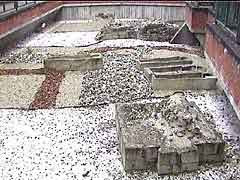
Nunnaminster is buried below the gardens of
Abbey House, at the resident of the Mayor
of Winchester

Celibacy is a crucial, primary feature of monastic life, though I don't see many non-institutional people discussing it these days. It isn't a popular topic among Americans. There are some folks on the internet claiming to be independent monastics of some sort, calling it by various terms, including monikers such as "anchoress" or "hermit" -  while at the same time living with spouse and children and conducting an active sex life. Monastic life is a solitary life that is sometimes lived together among others who are ALSO living a celibate/chaste life, which is known as a "cenobitic" arrangement. Sex activity is not part of the deal!

Most hermits I've read about do not spend their entire lives in that state. It seems to be a type of life to which some religious folk resort for a time certain, and then they return to a more active life or, as in the case of the Hindu Sannyassinis, it is a lifetime occupation. Even so, followers would often gather around the people - something I discourage, especially since I am not attached to any institution that would support it.

It is clear to me that The Lord definitely intends for me to live this life for the duration because my circumstances keep trending in that direction very strongly. For instance, the constant aggravation with the caregiver situation. Although I was approved for a caregiver at least 2 years ago, I have yet to find one. There is a terrible dearth of "caregivers" in general, and ALL the agencies are scrambling to try to serve their clients.  I have had some terrible experiences with agencies. The people either do not show up at all, or show up whenever they feel like it, or show up drunk or stoned, or show up and tell me they are disabled and can't do any real work, or show up and steal from me - or some combination of the above.


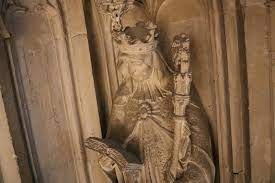
Saint Ealhswith's statue at Winchester

Today, the 3rd day of a new caregiver, she was late for the third day - in other words, late EVERY day - but today she is refusing to give me the simple courtesy of a phone call to tell me that she will be late. 

Not only is she refusing to give me a simple phone call to advise me she will be late, but the schedule we agreed upon has VANISHED somehow, in lieu of which, she expects to wander in here at some point after dusk - whenever her other activities allow, which definitely does not work for me.

The work that she DID manage to do was sloppy, not to requirements, not in accord with what I asked, and in some cases she ruined some things which had to be thrown out. I am having to re-wash all the dishes, including the blender, which I showed her how to clean. When I brushed my teeth this morning with my battery-operated toothbrush, the unmistakable flavor, scent and pucker of Ajax chlorine bleach powder hit my nose and my taste buds.  It was horrifying. The taste of some kind of filth also lingered, and I became convinced she had either dropped my toothbrush onto the floor or had used it to clean the grout in the sink (something she denies.) I rinsed and rinsed and rinsed and rinsed, then I gargled with hydrogen peroxide. And repeated.  I had a headache the entire day.

Every time a new "caregiver" is slated to start, I prefer to think well of them. I try to find whatever seems good about the person. It makes me happy to do this, but, conversely, when it does not work out, it may be that my initial assumptions work against me and make me feel more disappointed. I always start with high hopes. There is something odd happening with certain types of service jobs. There is a name for this tendency to abandon service jobs in favor of others that allow you to work at home or that may pay more. Covid started it, but I believe our nation's steep disparity of income that has increased in severity since the 1970's is to blame.


DISPARITY OF U.S. INCOME
1970 through 2005
Data from the Dept. of Labor


The first question that goes running through my mind is; Why do these people have such a crappy work ethic?

But the second thought is the understanding that this is just another way of the Lord enforcing my hermit state but unlike a hermit with institutional support, I am just as alone over here as the Desert Mothers - and perhaps MORE so. I am not without friends. Don't get me wrong. I have some lovely friends, but they have husbands and families and live on the other side of town.

After two years of disruptive irresponsible "caregivers" coming to my apartment and wasting my time training and instructing them, only to find myself shat upon in one fashion or another, I am resolved to TAKE THE HINT and give up on the idea of a caregiver. (Face it - the caregivers have given up on ME, really. It is silly to pretend that I can CHOOSE to give them up, since I can't seem to keep one here.)


Because I am physically disabled and cannot keep up with dishes and cooking, and because this is the main source of the mess in the apartment, aside from the paperwork that has gotten away from me, I need to figure out a completely different method of getting myself fed. I may need to eat at a restaurant every day.  I really don't know. How could I AFFORD that? It seems unreasonable.

If I lived near a health food restaurant or store where I could pop in and have something to eat quickly every day, that would be ideal - if I could figure out how to afford it.

Even CANNED food has to be heated up in some utensil, and then bowls and spoons involved, etc. Likewise a salad involves washing and cutting, and then cleaning of bowls, plates, flatware.

Frozen meals used to be affordable, but they're not, really, especially since the electricity keeps getting shut off over here, endangering the safety of eating food that has been partially defrosted and then re-frozen again.

I thought about making smoothies, but those also involve washing and cutting of the fruits, assembling the blender, making it, then taking apart the blender and washing it and the glass that I use to drink from. All of these activities require a certain amount of standing for prep work and dish washing that I just can't do. 

This topic stimulates some lovely memories I have of when I was a nun in a Vedanta (Hindu) convent in California and I often volunteered to do the cooking part of the work schedule that the younger nuns had to do. Cooking is a marvelous way to demonstrate to others a certain care for them and is an aspect of loving service that we all NEED. Feeding someone literally keeps them alive. It is hard, now, to be so physically compromised that I cannot even cook for myself, much less in service to others, but it is important for me to learn to surrender to the reality of the situation. I do my best to be a light burden on others, at the very least.

Now, if I was Saint Ealhswith, I would never have to worry about how to feed myself because others would be doing it for me. She was a queen, a station of life that relies on a model in which one person gets served by dozens of people, which is rather more the opposite of monastic life. It is fascinating to me that I am descended from so many kings and queens because that life is certainly different than the one I have led!


Saint Alfred the Great


I am going to bring this to the Lord and ask HIM to fix it up for me. After all, HE is the one who has made me THE ACCIDENTAL HERMIT. It is up HIM to fix it. Isn't it?

Or shall I just retire the kitchen cooking supplies, give up all food prep and struggle on? I don't know.  Saint Ealhswith, my grandmother, please inspire me today and intercede for me at the foot of God's holy throne.

May we all be blessed!

Mother Silver Rose
Sannyasini Kaliprana

P.S. All of the blog posts I write are independently researched and written by me and all of them are protected by legal copyright, so please just enjoy them here and leave them here where you found them and do not copy any of it to any other place for any purpose.

(c) Copyright 2022, Silver S. Parnell
All rights reserved.